Sensors have become an essential part of modern industrial systems, helping monitor pressure, temperature, humidity, gas concentration and several other operating conditions. Their performance directly impacts system accuracy, efficiency and reliability. However, sensors often operate in environments where exposure to dust, moisture, chemicals, pressure fluctuations and mechanical stress is unavoidable.
Such environmental conditions, without sufficient protective measures, could eventually cause deterioration of the performance of sensors by giving false information or increasing maintenance costs, among others. Porous plastic material for use in protecting sensors presents a viable solution in this case. Such hydrophobic porous plastic components allow air to flow yet protect from contamination of sensor components.
This article explores how sintered porous plastic protects sensors, the role of porous plastic breathers in environmental protection and why sensor protection is important in industrial environments where long-term reliability and consistent performance are essential.
Get custom sintered plastic sensor protectors built for your industrial application.
What Is Porous Plastic and How Does It Protect Sensors?
Porous plastic is a permeable polymer material with interconnected pores distributed throughout its structure. These microscopic pathways allow air or gases to pass through while preventing unwanted contaminants from entering the system.
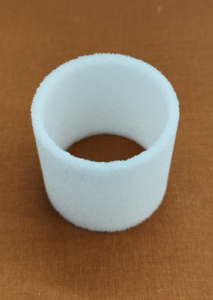
As opposed to the traditional solid plastic components, the porous plastic is made with the objective of enabling the permeability of air. This makes the material applicable in cases where airflow and filtration are of equal importance to environmental protection. The porous plastic is naturally hydrophobic porous plastic.
Key characteristics of porous plastic include:
- Controlled pore size distribution
- Lightweight construction
- Chemical resistance
- Structural integrity
- Customizable design flexibility
Sintered plastic is commonly used in:
- Filtration systems
- Venting solutions
- Breather components
- Environmental protection devices
- Sensor protection assemblies
Since the entire structure functions as a filtration medium, sintered plastic delivers depth filtration rather than only surface filtration. This increases durability and supports long-term performance in demanding environments.
Because of these advantages, sintered plastic sensor protectors are widely used where sensitive systems require airflow without exposure to dust, moisture, or contaminants.
What Are Sensors?
Sensors refer to the equipment whose purpose is to detect, measure and act upon changes in certain physical, chemical and environmental factors. The sensors are able to convert physical inputs like temperature, pressure, humidity, gas levels, motion or light into signals.
There has been a major increase in applications of the sensors in all sectors due to the need for automation and surveillance. Sensors help in providing safety and efficiency in the process industry.
Sensors operate by detecting specific stimuli and converting them into electrical signals that are transmitted to processors or monitoring systems. Since many sensors rely on interaction with air or the surrounding environmental conditions, they need direct exposure to their environment. However, this exposure also increases vulnerability.
Dust, moisture, debris and chemicals may affect the sensitive sensor components. Dust and moisture protection of sensors becomes necessary for preserving their accurate performance.
A good design of a sensor protector made of hydrophobic porous plastic will make the sensor react to its environment while protecting itself from external pollution.
Why Is Sensor Protection Essential?
The sensors are normally employed in conditions where there is neither cleanliness nor control. The industrial areas may contain particles, changing humidity levels, temperature differences and environmental pollutants that might adversely affect the operation of the sensors. Similarly, outdoor installation may also pose difficulties in terms of rainfall, pollution, dust and pressure changes.
This clearly demonstrates why sensor protection is important in industrial environments, where measurement accuracy and equipment reliability directly affect productivity and system performance.
Without adequate protection, sensors may experience the following:
- Calibration drift
- Reduced response speed
- Contamination buildup
- Internal corrosion
- Electrical short circuits
- Premature or complete failure
These issues not only reduce sensor accuracy but also contribute to increased downtime, maintenance costs and operational disruptions.
Such sintered plastic sensor protectors will significantly cut down the risks through the provision of the necessary barrier while still allowing sufficient airflow for efficient functioning of the sensor. We have found better performance and extended service life in equipment incorporating adequate environmental protection.
Which Environmental Threats Make Sensor Protection Essential?
1. Water Exposure
Water is considered one of the worst environmental effects on sensor systems. Sensor components that are mounted either externally, underground, or internally within automobiles and industrial equipment are regularly subjected to water from rain and splashes. The presence of just small amounts of water can affect sensors adversely.
Apart from this immediate consequence of the exposure, moisture can also enter equipment due to condensation that occurs as a result of a variation in temperature. Where there is warming air which is cooled in an enclosed system, it might lead to moisture forming on some fragile electrical components.
What should be done in this situation is to design a breathable, porous plastic made of hydrophobic porous plastic in order to ensure proper airflow without water drops.
2. Dust And Particulate Matter
Airborne dust and fine particles are among the most common threats to sensors. Manufacturing facilities are places where contaminants exist and these could find their way into the openings of unprotected sensors.
The accumulation of dust over time would result in a reduced air flow rate, hinder gas movement and affect the accuracy of measurements.
A sensor dust cover made from porous plastic that uses sintering technology is effective in protecting sensors from dust and water without obstructing air flow.
3. Moisture And Condensation
Humidity and condensation provide yet another difficulty. Exposure to moisture may cause corrosion of internal electronic components and distort measurements.
This problem is usually exacerbated through changes in temperature, which, in turn, create pressure changes resulting in moisture entering the system.
By enabling airflow while limiting contaminant ingress, a sintered plastic breather for pressure equalisation helps reduce condensation risks and improve long-term protection.
4. Chemical Vapours And Corrosive Environments
Most industrial processes work under such environmental conditions where the sensors will be subjected to chemical fumes or corrosive gases. This gradual effect can eventually affect their performance. The porous plastic materials offer protection from these chemicals without blocking airflow.
5. Pressure Variations And Mechanical Stress
Temperature fluctuations often cause air within sealed systems to expand and contract. Without ventilation, pressure differences can stress seals, increase moisture intrusion and reduce system reliability.
That is why plastic breather vents for pressure sensors play such an important role. Pressure balancing will ensure that the enclosure remains intact and that its electronic components are protected. Also, vibrations and other forms of mechanical strain can affect sensor systems that are exposed to these factors. This calls for using plastic sensor protectors.
How Does Porous Plastic Function As A Sensor Protector?
1. Controlled Airflow And Filtration
The primary function of a sensor protector is to allow airflow while preventing contaminants from reaching sensitive components. The porosity of the plastic is designed in such a way that the filtration of particles can be achieved without hindering the flow of air. This interconnecting porous network formed during the sintering process guarantees that the material will have uniform permeability.
This controlled airflow is important because sensors must interact with surrounding conditions to generate accurate readings. Restricted or inconsistent airflow can affect response time, while unrestricted contaminant exposure may reduce measurement accuracy. This is one of the key examples of how sintered porous plastic protects sensors across industrial applications.
Apart from providing accurate measurements, pore consistency in distribution will also provide a consistent performance throughout the manufacturing process. This is because OEMs will require consistent performance while making reliable porous plastic to protect sensors.
2. Hydrophobic Nature
The hydrophobic porous plastic structure helps repel liquid water while still allowing air to move through the material. This selective permeability becomes particularly valuable in applications exposed to rain, splashes, washdowns, or high-humidity environments.
The plastic used for the sensor housing is highly porous and does not allow any fluid to enter. The sensors continue working effectively as corrosion or damage to the electronics inside does not occur. At the same time, the airflow remains unaffected.
This combination of airflow and moisture resistance strengthens sensor protection against dust and moisture, making porous plastic a practical solution in challenging operating environments. Feedback from several industrial applications has also highlighted the effectiveness of porous plastic under moisture-sensitive conditions.
3. Depth Filtration Advantage
In contrast to the usual filters, which trap the contaminants only on the surface level, sintered porous plastic filters are able to filter particles right through the depth of the substance.
The contaminants are present within the pores of the sensor protector rather than being trapped on the outer surface layer. Thus, the sensor protector can still function effectively for long periods of time.
Furthermore, depth filtration ensures stability under conditions where contaminant levels may fluctuate greatly. As air flow is not based on one filtration surface, the use of porous plastic continues to be effective as it captures contaminants.
This characteristic further enhances sintered plastic sensor protectors, especially in environments where sensors are continuously exposed to airborne particles.
4. Acting As A Breather
A breather is a venting component designed to allow air exchange while preventing contamination. Porous plastic breathers are particularly effective in sealed systems where pressure equalisation is necessary to protect sensitive components.
As a breather, sintered plastic can:
- Equalise internal and external pressure
- Reduce condensation buildup
- Protect sensitive electronics
- Maintain environmental protection
The role of a sintered plastic breather for pressure equalisation becomes especially important in automotive systems and outdoor equipment, where temperature fluctuations frequently create pressure differences inside enclosures.
Pressure buildup within the system may damage the seal or even cause moisture intrusion when the enclosure is not properly vented. Plastic breathers that are made specifically for pressure sensors help in maintaining proper enclosure as well as the effective functioning of the sensors.
Furthermore, Porous plastic breathers are non-corrosive, lightweight and can be used with different types of material for housings. They are also rigid enough to work effectively even in the case of vibrations.
5. Mechanical Protection
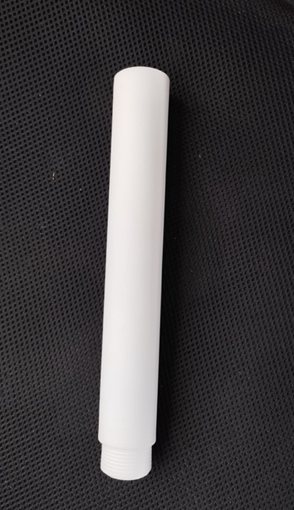
Beyond airflow and filtration, porous plastic sensor protectors also provide physical protection for delicate sensing elements. Their rigid structure helps shield components from accidental impact, abrasion and external mechanical stress.
Sintered plastics offer dimensional stability and prevent deformation of protective devices under extreme operating conditions. In other words, their use ensures stable airflow pathways and sensors’ ability to operate effectively.
There is another innovative sensor protector that uses self-threaded sintered plastic protectors. They simplify installation processes because such devices can be mounted without any additional fixtures.
Applications Of Porous Plastic Sensor Protectors
1. Industrial Automation
Industrial facilities and processing environments often contain dust, oils, vapours and airborne contaminants that can affect sensitive sensor systems. Sensor protection becomes critical for pressure transmitters, gas analysers, flow meters and process control systems.
Any problem in the functioning of sensors will cause some inefficiency in processes. The use of sintered plastic sensor protectors ensures an effective interface between the sensor and the surroundings, at the same time ensuring that environmental protection is maintained.
Chemical resistance and structural integrity have made these protectors applicable in the presence of industrial gases.
2. Environmental Monitoring Systems
Air quality monitoring stations and weather monitoring systems frequently operate outdoors for extended periods. A porous plastic sensor protector provides controlled airflow while protecting sensors from rain, dust and airborne debris.
Since many monitoring systems operate in remote locations where maintenance access may be limited, porous plastic for sensor protection applications helps support long-term reliability and uninterrupted data collection.
3. Automotive Applications
Sensors play a key role in modern automobiles as far as emission monitoring, pressure measurement and environmental control are concerned.
The automobile environment comprises vibrations, road dust, temperatures and humidity. In such an environment, sensor protectors made of sintered plastic material are important to guarantee that sensors operate effectively. The sensor protectors are known to be lightweight and unaffected by environmental conditions.
4. Medical And Laboratory Equipment
Medical equipment and laboratory systems often require controlled airflow and clean operating conditions. Porous plastic components provide dependable sensor protection while helping maintain cleanliness standards. Their dimensional consistency and corrosion resistance support long-term use in precision applications.
5. Electronics Enclosures
Ventilation is often required in sealed electronics to avoid pressure and moisture buildup.
And this is where plastic breathers come into play, especially for sensors and enclosures.
Plastic breathers facilitate airflow control while ensuring that contaminants do not get inside the enclosure or affect the sensors.
Benefits of Using Sintered Plastic for Sensor Protection
1. Uniform Porosity (Consistent Performance)
One of the key advantages of sintered plastic is its evenly distributed pore structure. Uniform porosity allows air to flow through the material in a controlled and consistent manner. This becomes particularly important for sensors, where airflow irregularities can affect readings and response accuracy.
The flow of air that is constant due to the porous nature of plastic ensures sensors have constant interactions with their surroundings, thus improving their performance. This sort of controlled design is among the factors that ensure sintered porous plastic protects sensors efficiently.
2. Corrosion Resistance (No Rust Issues)
Unlike metal alternatives, sintered plastic does not rust or corrode when exposed to moisture or humid environments. This makes it particularly suitable for outdoor installations and industrial applications where water exposure is common.
For cases that involve continuous moisture exposure, there is bound to be a loss of performance on account of corrosion for metallic parts used in those situations. Porous plastics avoid this problem and can offer improved life along with reduced performance loss.
Hydrophobic porous plastics provide added protection against moisture problems.
3. Lightweight Material (Easy to Integrate)
Sintered plastic is considerably lighter than conventional filtration media like metals. This makes the material easy to handle and install.
This becomes even more advantageous in mobile equipment and vehicles, where there is always a need for lightweight components. Lower overall weight can also reduce system load while simplifying assembly requirements.
4. Good Chemical Resistance
Many industrial processes often come into contact with oil, solvents, vapours and various types of chemicals that may impair the performance of parts.
Porous plastics possess strong resistance to numerous types of chemical compounds and, hence, maintain their stability even in extreme operational conditions.
Thus, because of this feature, porous plastics employed for the shielding of sensors prove suitable for the operation in cases of contact with chemicals.
5. Long Service Life (Reduced Maintenance Requirements)
Unlike conventional filtration materials that trap contaminants only on the surface, porous plastic distributes particles throughout the thickness of the structure.
This depth filtration capability helps reduce clogging while maintaining airflow over longer operating periods.
In such a case, sintered plastic sensor protectors will need less cleaning, less replacing and will have reduced need for maintenance. Operating costs will thus be lowered and reliability increased.
Engineering of the protective parts can contribute greatly to minimising service interruptions and ensuring stable performance of the sensors.
6. Flexible Design Options
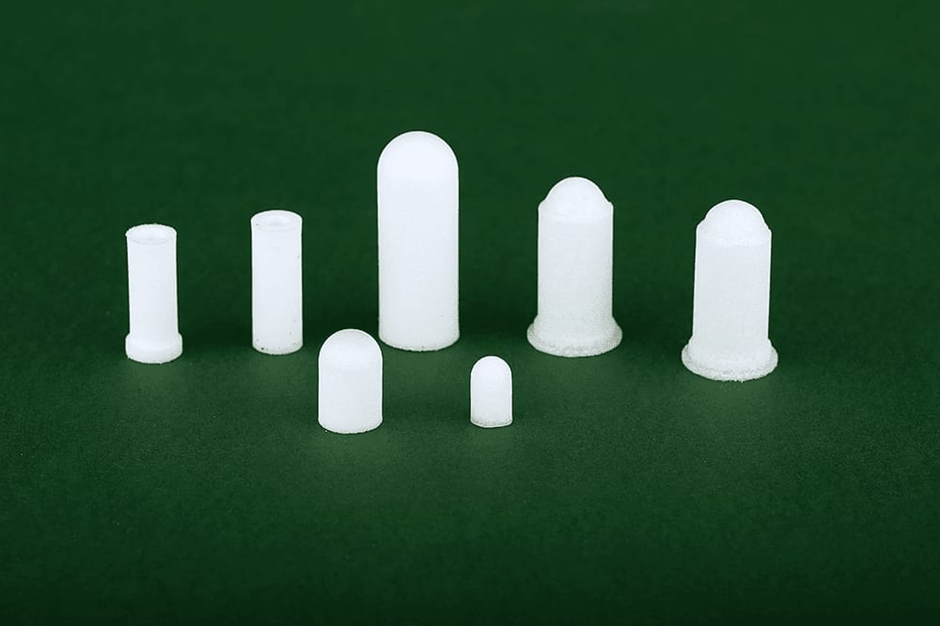
Another major advantage of sintered plastic is manufacturing flexibility. Components can be developed in various shapes and configurations depending on application requirements.
Common forms include:
- Discs
- Cylinders
- Rods
- Threaded inserts
- Press-fit components
- Custom moulded parts
Custom manufacturing of application-specific components allows engineers more freedom of design. This flexibility means that porous plastics can be used in a broad array of applications.
A custom design may also incorporate plastic breather vents where required due to special air flow requirements or pressure sensor enclosures.
Choosing the Correct Protector for Your Sensor
The choice of the proper porous plastic material involves taking into account many different performance and environmental factors. The right choice leads to reliable sensors.
1. Airflow Requirements
The sensors need a sufficient flow of air to work properly. The flow of air is essential since insufficient air can affect the performance and accuracy of the sensors.
Pore structure consideration can ensure that there is a proper balance between protection and airflow.
2. Filtering Capability
There should not be much interference in the air flow during filtering by the sensor protector.
This means that there will be a balance between air flow and protection.
3. Environmental Exposure
The environment plays a vital role in the choice of materials.
There will be unique challenges in outdoor use, industrial use and controlled environments due to exposure concerns, including humidity, temperature changes and contaminants.
The proper choice of hydrophobic porous plastics can offer greater environmental resistance.
4. Mechanical Stress
Mechanical stress is a factor for sensors used in highly vibrating and impacting environments.
Protective material should remain strong and not deform or crack.
5. Chemical Compatibility
Applications involving oils, chemicals, or gases require materials resistant to environmental degradation.
Porous plastic materials are often selected because they maintain performance under demanding chemical conditions.
6. Mounting Method
The way through which the protector will be incorporated into the casing structure is equally critical.
Be it press-fits or screw thread type mechanisms, proper incorporation ensures that the integrity of the system is not compromised.
Porous Plastic vs Alternative Materials
When selecting materials for sensor protection, it is important to evaluate how different options perform under actual operating conditions. Every material offers certain advantages, but some limitations influence long-term performance and reliability.
1. Metal Filters
Metal filtration devices have very efficient mechanical properties that function effectively in high-pressure environments. They can only be used where durability is required.
The problem with using metal materials in filters is that they are heavy and are capable of corroding if used in wet conditions, thereby becoming inefficient and costly in terms of maintenance.
Plastic material, however, is light, not capable of corroding easily and relatively simple to incorporate into the operation of sensors.
2. Membrane Vents
Membrane vents tend to be chosen when it is necessary to protect against water. This is because they allow air to flow through but prevent the entry of liquids.
Membrane vents have one significant weakness; however, membrane materials tend to be very thin and thus prone to vibration and mechanical wear or even the build-up of contaminants.
Compared to membrane alternatives, hydrophobic porous plastic offers stronger structural support and long-term airflow consistency.
3. Foam Filters
Foam filters are cost-effective and usually employed in basic filtration operations.
On the other hand, foam filter media may deteriorate with time owing to heating effects, chemical exposure, or working under harsh conditions, resulting in lower efficiency.
For a more reliable form of dust and moisture protection on a long-term basis, the use of sintered porous plastic provides better results.
Overall, the use of porous plastic still serves as an effective material for those who require airflow control.
How Does Sansuk Industries Support Sensor Protection Applications?
As a trusted sintered porous plastic products manufacturer in Mumbai, Sansuk Industries develops engineered porous plastic solutions designed for demanding industrial and sensor protection applications.
Our porous plastics are produced using pore sizes that will help control air flow, filtration and environmental safety. We work hand-in-hand with our clients to offer tailor-made solutions that will suit their sensors and environmental protection equipment.
Where applications demand that their components be waterproofed and protected from external elements, our sintered porous plastics can provide an optimal solution for allowing air flow while preventing moisture ingress.
Moreover, we offer special filtration and venting solutions through our network as a distributor of porous plastic Vent Plug filters in India, catering to various industrial and electronics applications.
By using our expertise on materials, manufacturing processes and customised development services, Sansuk Industries continues to serve different industries with its reliable porous plastic products.
Explore Sansuk’s trusted porous plastic solutions for sensor protection needs.
Conclusion
As sensor usage continues to grow across industries, the need for reliable environmental protection becomes increasingly important. Sensors regularly operate in environments exposed to dust, moisture, chemicals, vibration and temperature fluctuations. Without adequate protection, these conditions can affect measurement accuracy, reduce service life and increase maintenance requirements.
This clearly demonstrates why sensor protection is important in industrial environments, where consistent performance and operational reliability directly influence productivity.
Porous plastic, particularly hydrophobic porous plastic, has proven to be an effective solution for protecting sensitive sensor systems. It combines controlled airflow, depth filtration, chemical resistance and durability within a lightweight and customisable structure.
Unlike alternatives such as metal filters, foam materials, or membrane systems, porous plastic provides a balance between environmental protection and airflow performance without sacrificing long-term reliability.
As industrial systems continue advancing, porous plastic for sensor protection applications will remain a dependable solution for maintaining sensor accuracy, reducing maintenance requirements and supporting long-term operational performance.

FAQ's
How do porous plastic sensor protectors improve sensor reliability in industrial environments?
Sintered plastic sensor protectors improve reliability by allowing controlled airflow while preventing dust, moisture and contaminants from reaching sensitive components. This helps maintain measurement accuracy, reduce failures and support long-term sensor performance in demanding environments.

sansuk
What factors should be considered when selecting a sensor protector for industrial applications?
Selection should consider airflow requirements, filtration efficiency, environmental exposure, chemical compatibility and mounting design. Proper selection ensures sensor protection against dust and moisture while maintaining reliable airflow and long-term operating performance.
sansuk
How can sensors be protected from moisture and condensation in outdoor or industrial environments?
Using hydrophobic porous plastic components helps reduce moisture ingress while maintaining airflow. Combined with a sintered plastic breather for pressure equalisation, sensors can remain protected against condensation and environmental exposure.
sansuk
Are porous plastic sensor protectors suitable for chemically aggressive environments?
Yes. Porous plastic materials offer strong resistance against many oils, solvents and industrial chemicals. This makes porous plastic for sensor protection applications suitable for demanding environments requiring both airflow and chemical resistance.
sansuk
How do sensor protectors enhance performance in automotive applications?
Sensor protectors help maintain airflow while shielding sensors from road debris, vibration, moisture and environmental contaminants. This protection improves reliability and supports stable sensor performance under varying vehicle operating conditions.
sansuk
Why are porous plastic breathers important for electronics enclosures?
Porous plastic breather vents for pressure sensors and electronic enclosures help equalise pressure while reducing moisture buildup and contaminant ingress. This supports enclosure integrity and improves protection for sensitive electronic systems.
sansuk
How do porous plastic components reduce maintenance costs in sensor systems?
Because contaminants are captured throughout the porous structure, components maintain performance over longer periods. This reduces the frequency of cleaning, replacement needs and overall maintenance requirements while improving system reliability.
sansuk