Ultra-High Molecular Weight Polyethene (UHMWPE) has become one of the most dependable materials used in modern industrial filtration. Its exceptionally long molecular chains provide outstanding wear resistance, chemical stability, and mechanical strength, making it ideal for applications where durability and consistent filtration performance are essential. When manufactured using sintered porous plastic technology, UHMWPE develops a controlled network of interconnected pores that allows air and liquids to flow while effectively retaining unwanted particles.
Among the various materials used for sintered porous plastic filters, UHMWPE has become one of the most reliable choices for demanding industrial environments. Over the last five years, Sansuk Industries has observed growing demand for UHMWPE filter elements, particularly in applications requiring high durability, chemical resistance, and consistent process performance.
In this blog, we explore what sintered porous plastic UHMWPE filters are, how UHMWPE filters work, the benefits of sintered UHMWPE filters, and why they continue to be the preferred choice for industrial filtration across multiple industries.
A] What are Sintered Porous Plastic UHMWPE Filters?
UHMWPE filters are rigid, porous filtration components manufactured from ultra-high-molecular-weight polyethylene via sintering. During manufacturing, UHMWPE polymer particles are fused while preserving an interconnected network of microscopic pores throughout the material. These pores create controlled pathways that allow gases and liquids to pass while capturing unwanted contaminants with consistent filtration performance.
While woven materials and fibre filters are two-dimensional filters, the sintered porous plastic filters are applied in 3D filtration. In comparison to simply filtering the substances on the surface of the filter, the sintered porous plastic filter filters the entire layer. It results in more stable and durable filters with uniform permeability. Filters from UHMWPE become particularly useful in such cases.
B] How do UHMWPE Filters Work?
The effectiveness of UHMWPE filtration lies in its engineered pore structure. Every filter contains thousands of interconnected pores that regulate airflow or liquid flow while retaining particles according to the required filtration rating.
The filtration process works through two key principles:
- Controlled Flow: Air or liquid moves evenly through the porous network.
- Particle Retention: Contaminants larger than the engineered pore size are captured within the filter structure.
Polymer particle size and the parameters of the sintering process can be controlled during the manufacturing process to ensure that UHMWPE filters can be made for both large-flow industry and fine filtration purposes.
C] Key Properties of UHMWPE Filters
There is an increasing need for UHMWPE filtration due to the special attributes of this type of material, including chemical resistance, abrasion resistance, controlled porosity, and mechanical toughness.
1. Superior Chemical Resistance
One characteristic that defines the sintered porous plastic UHMWPE filters is the ability to resist numerous acids, bases, and solvents without any harm done to the structure of the filter. This makes them suitable for use in chemical operations where corrosive liquids and chemicals are used.
2. High Abrasion Resistance
The exceptionally long molecular chains of UHMWPE provide outstanding resistance to wear and surface damage. Even in systems containing abrasive particles, these filters maintain their structure and continue delivering consistent filtration performance over extended periods.
3. Low Friction Surface
This polymer already has very low surface friction, which allows fluids and gases to flow through the porous medium. It helps maintain a constant flow rate.
4. Porous Size Control
Porous size control is one of the main advantages of porous sintered plastic technology. Porous size can be controlled using polymer particle size and the sintering process.
5. High Mechanical Strength
Industrial filtration systems often operate continuously under varying pressure conditions. UHMWPE filters resist tearing, collapse, and deformation, making them highly dependable for long-term industrial operation.
D] Benefits of Sintered UHMWPE Filters
Compared with ordinary filters such as paper, textile, or metal meshes, sintered ultra-high molecular weight polyethylene filters offer many more benefits beyond mere particle separation.
1. Long Service Life
The filters made of sintered ultra-high molecular weight polyethylene have outstanding strength because they are made of polymer shapes, not fibres.
2. Uniform Efficiency
As a result of the consistent pores, the efficiency of the filters is uniform throughout the filter unit.
3. Ability to Be Used Several Times
A significant part of sintered porous plastic filters can be used several times due to the cleaning possibility.
4. Design Flexibility
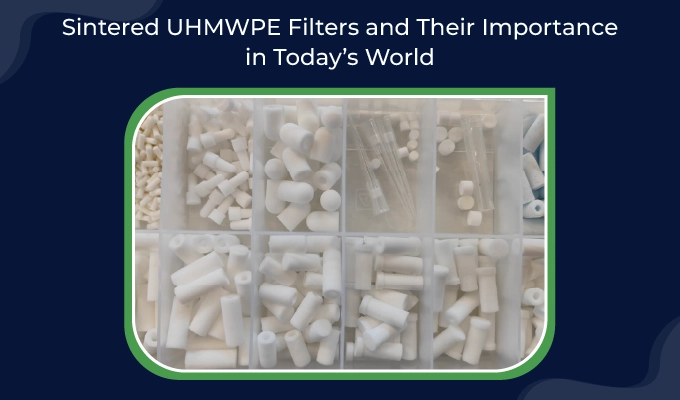
UHMWPE filtration components can be manufactured in numerous configurations, including:
- Filter discs
- Rods
- Sheets
- Candles
- Custom moulded shapes
This makes it possible for filtration units to be customised based on very exact specifications. Companies that need their filtration parts customised usually do so by working with an established porous plastic filter disc supplier in India.
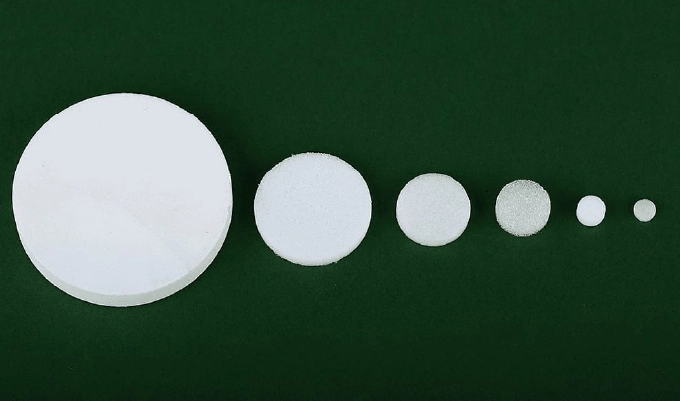
UHMWPE Filter Discs

UHMWPE Filter Rods
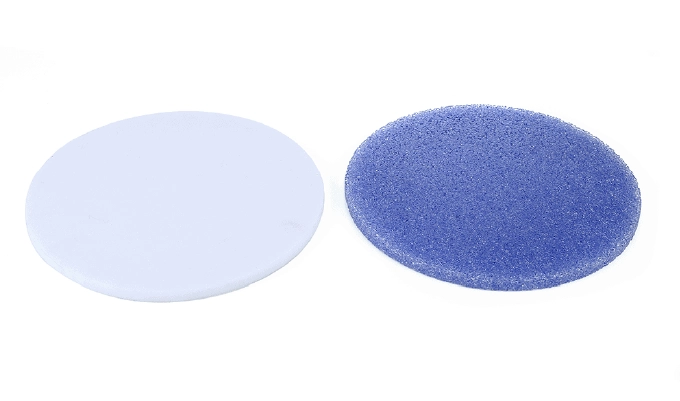
UHMWPE Filter Sheets
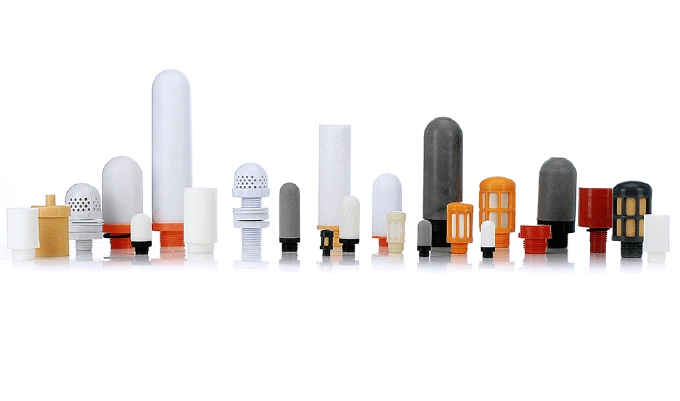
UHMWPE Filter Candles
E] Applications of UHMWPE Porous Plastic Filters
The combination of high porosity, abrasion resistance, and chemical stability has made UHMWPE filters highly versatile. The application of these filters is extensive in various industries where air and liquid filtration is required.
1. UHMWPE Filters for Chemical Processing
For chemical processing, a strong material that is impervious to the fluid is required. UHMWPE filters for chemical processing provide a guarantee of superb chemical resistance and maximum filtration efficiency in all difficult conditions.
2. UHMWPE Filters for Pharmaceuticals
The pharmaceutical manufacturing process requires filtration, making porous plastic UHMWPE filters an indispensable unit for laboratory and medical filtration systems.
3. UHMWPE Filters for Water Filtration Applications
For water purification systems, there is a need for filter media that can separate suspended particulates but will not foul under long-term usage conditions. The UHMWPE filters for water filtration are reliable choices for purification and treatment applications.
4. Food & Beverage Filtration
The food and beverage industries rely on filter media which hold up to repeated cleaning without breaking down structurally. The UHMWPE filters can be used in beverage filtration applications.
5. Industrial Gas Filtration
It is important to make sure that air and gases used in industry are cleaned properly. Under these conditions, the most appropriate filters are those made of sintered UHMWPE, which can offer sufficient efficiency and longevity.
6. Batteries and Energy Systems
As the methods of storing energy become more advanced, porous plastics are widely used in the production of batteries and energy systems.
F] Why Choose UHMWPE Filters for Industrial Filtration?
UHMWPE filters offer:
- Excellent resistance to acids, alkalis, and industrial solvents
- Superior abrasion and wear resistance
- Controlled pore sizes for precise filtration
- Strong mechanical stability during continuous operation
- Long operational lifespan with reusable filtration capability
- Reliable airflow and liquid flow characteristics
These qualities make UHMWPE one of the most dependable porous plastic materials for demanding industrial filtration systems.
G] UHMWPE vs Polypropylene Filters
While both materials are widely used in porous plastic filtration, they offer different performance advantages depending on the operating environment.
| Feature | UHMWPE | Polypropylene (PP) |
| Abrasion resistance | Excellent | Good |
| Mechanical durability | Very High | High |
| Wear resistance | Superior | Moderate |
| Chemical resistance | Excellent | Excellent |
| Operational lifespan | Longer | High |
| Best suited for | Heavy-duty industrial filtration | General industrial filtration |
Applications requiring abrasive media, constant mechanical stress, and longer operation periods will typically favour UHMWPE, whereas polypropylene can be considered as a suitable option for most conventional industrial filtration processes.
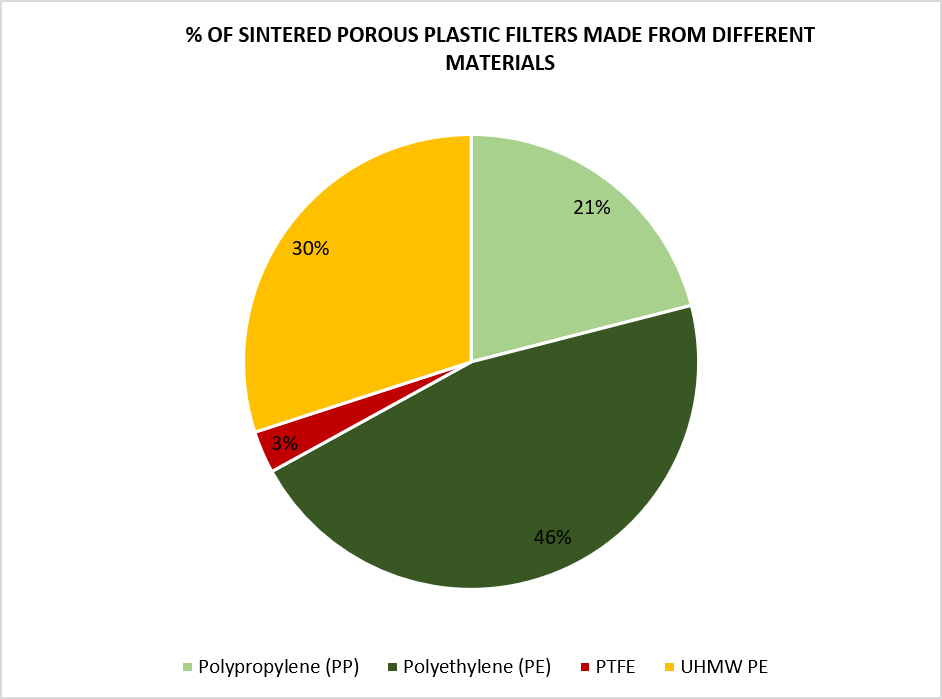
H] Does Ultra-High Molecular Weight Polyethylene Price Affect Filter Selection?
Yes, the ultra-high molecular weight polyethylene (UHMWPE) price can affect filter selection, but it should not be the only deciding factor. A cheaper filter may have a lower upfront cost but can require more frequent replacement, perform poorly under abrasive conditions, or increase maintenance and downtime costs.
When comparing UHMWPE filter media, engineers should evaluate factors such as pore size, filtration efficiency, porosity, thickness, dimensions, chemical resistance, abrasion resistance, and expected service life. The operating conditions of the filtration system also matter, including the type of slurry or solids being filtered, temperature, pressure, and exposure to aggressive chemicals.
For example, a higher-priced UHMWPE filter designed for severe abrasive or chemically demanding applications may last significantly longer than a lower-cost alternative. Fewer replacements can mean lower labour costs, less downtime, and more consistent filtration performance over time.
Therefore, the right approach is to compare total cost of ownership, not simply the purchase price. Consider:
- Initial filter cost
- Expected service life
- Replacement frequency
- Maintenance and labour costs
- Downtime during filter replacement
- Filtration performance and product quality
In short, UHMWPE price matters, but performance and lifespan determine whether the filter is actually cost-effective for a specific industrial application.
I] Customization Options for UHMWPE Filters
The key advantages of producing sintered porous plastic filters include the possibility of designing filters to meet certain criteria of operation. In contrast to utilizing ready-made elements, several design features can be modified to meet the required filter characteristics.
Customization options include:
- Pore size and filtration rating
- Porosity level
- Filter thickness
- Mechanical strength
- Surface treatments
J] Geometry and overall dimensions
This offers great versatility in the design and enables the manufacture of UHMWPE filters that can be used in highly specialised industrial settings. In the case of an engineered solution, companies prefer working with experts, such as Sansuk Industries, a leading sintered water filter manufacturer in India.
K] Environmental Benefits of UHMWPE Filtration
Sustainability has become an increasingly important consideration in industrial manufacturing, and UHMWPE filtration contributes to longer-lasting and reusable filtration systems.
The environmental benefits include:
- Longer service life reduces the frequency of filter replacement.
- Reusable filter elements help minimize industrial waste.
- Consistent filtration improves overall process efficiency.
- Durable porous structures support sustainable manufacturing practices.
As industries continue to optimize their production processes, reusable porous plastic filtration is becoming an important step toward reducing operational waste and improving resource efficiency.
L] The Future of Sintered UHMWPE Filters
Advancements in polymer engineering continue to expand the capabilities of sintered porous plastic manufacturing. Improvements in pore-size control, material purity, structural design, and manufacturing precision are enabling UHMWPE filters to meet increasingly specialized industrial requirements.
Emerging applications include:
- Battery vent plugs
- Dissolution filters
- ESR filter tips
- Pipette tip filters
- NPWT suction filters
As filtration systems become more specialized and performance expectations continue to grow, UHMWPE porous plastic filters are expected to play an increasingly important role in next-generation industrial filtration technologies.
Conclusion
The UHMWPE filter is one of the leading technologies that can be found in contemporary industry. The controlled pore size, durability, and ability to resist chemicals and mechanical stresses make these filters applicable in different fields, including chemical industries, the pharmaceutical sector, and water purification.
The unique combination of ultra-high molecular weight polyethylene features and the advanced porous plastic sintering process provides high reliability, longevity and application-specific properties to the filters. With further improvement of industrial processes in terms of their efficiency and durability, UHMWPE filters will become even more important in the future development of filtration systems.
Sansuk Industries is a well-known porous plastic products supplier in Mumbai, sought after for manufacturing highly customised sintered UHMWPE filters for a range of industrial applications. Talk to our engineers for specialised filtration needs!

FAQ's
Are UHMWPE filters chemically resistant to acids and industrial solvents?
Yes. UHMWPE filters offer excellent resistance to a wide range of acids, alkalis, and industrial solvents, making them suitable for demanding chemical processing and industrial filtration applications.

sansuk
What is UHMW material?
UHMW stands for ultra-high molecular weight polyethylene, a high-performance polymer known for its exceptionally long molecular chains, outstanding wear resistance, chemical stability, and mechanical durability.
sansuk
What is reprocessed UHMW?
‘Reprocessed UHMW’ refers to ultra-high molecular weight polyethylene that has been recycled and reprocessed for suitable industrial applications. The raw content focuses on standard UHMWPE used in porous plastic filtration rather than reprocessed material.
sansuk
Is UHMW FDA compliant?
The raw technical content does not make any FDA compliance claims. Product compliance depends on the specific material grade and application and should be verified for individual products.
sansuk
Can UHMW be used as a wood replacement?
Yes, UHMW can replace wood in some applications because it is durable, moisture-resistant, and easy to maintain. However, its suitability depends on the specific use, and this blog focuses on UHMW in porous plastic filtration rather than wood replacement.
sansuk
Are there different grades of UHMW?
Yes. UHMW is available in different grades, each designed for specific performance requirements such as wear resistance, chemical resistance, strength, and filtration applications. These grades can also be tailored with varying pore sizes, porosity levels, and mechanical properties to meet the needs of specific industrial filtration systems.
sansuk
Can UHMWPE filters be reused after cleaning, or are they single-use?
Many sintered UHMWPE filters can be cleaned and reused multiple times. Their rigid porous structure contributes to longer service life, reduced replacement frequency, and lower operational costs while maintaining reliable filtration performance.
sansuk