Vent plugs are crucial components that directly impact the safety, reliability and service life of lead-acid batteries. At the heart of many vent plug designs is a porous battery vent plug filter disc, also known as a flame arrestor, which must simultaneously vent hydrogen gas, prevent acid leakage, stop flames from entering and retain electrolyte mist.
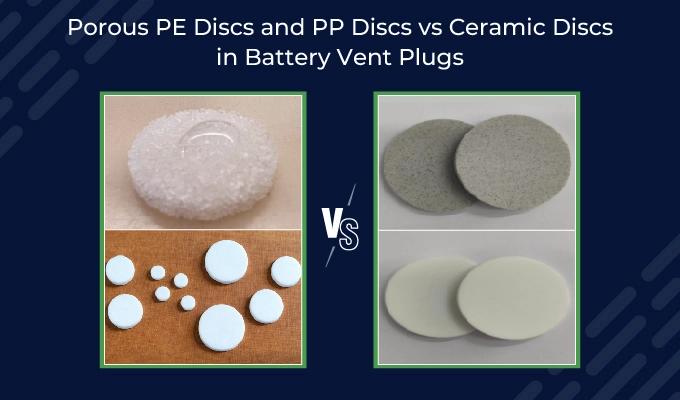
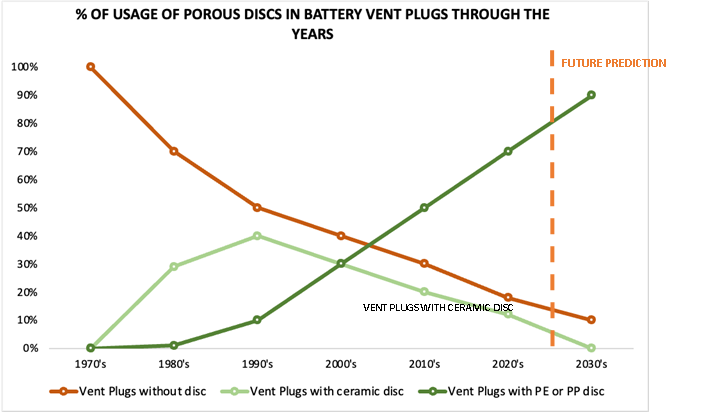
Historically, ceramic discs were the go-to choice for battery vent plugs. However, the advancement in the current battery technology has accelerated the rate of incorporation of porous polyethylene (PE) and polypropylene (PP) vent plug discs in the design of the battery. This is because these porous plastic filter discs are capable of giving the best results in terms of hydrophobic characteristics, airflow, resistance to sulfuric acid and mechanical durability. This article will discuss the major differences between porous plastic and ceramic vent plug discs.
Switch to high-performance PE/PP vent plug discs built for modern battery systems.
What Are the Functional Requirements of a Vent Plug Disc?
A porous disc in a battery vent plug must:
- Allow hydrogen gas to safely escape during charging
- Prevent acid from leaking out of the vent plug
- Stop flames or sparks from entering the battery
- Reduce electrolyte mist and acid droplet escape
- Maintain consistent airflow over time
- Resist sulfuric acid in both vapour and liquid form
- Withstand vibration, impacts, and temperature changes
Failure in any of these areas can lead to acid leaks, corrosion, electrolyte loss, and serious safety risks, making material selection critical.
https://sansukindustries.com/porous-pe-discs-and-pp-discs-vs-ceramic-discs-in-battery-vent-plugs/
Overview of the Materials
Ceramic Discs are usually alumina or silica-based materials. Ceramic Discs are rigid materials that are non-flammable. Even though ceramic materials have been a favourite for flame arrest due to their appearance, they are known to break. Moreover, it is difficult to preserve the pore characteristics of ceramic materials.
Porous PE & PP discs are produced by compacting polymeric powders into a rigid form. These are chemically inert to sulfuric acid. These are thermoplastics that can be tailored to have a specific pore size, thickness, and surface properties to suit the venting needs of the battery.
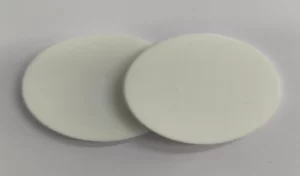
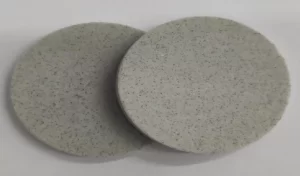
Porous Plastic vs Ceramic: Key Performance Differences
| Performance Factor | Porous PE/PP Discs | Ceramic Discs |
| Chemical Resistance | Fully resistant to sulfuric acid; stable over years | Absorbs electrolyte; prone to clogging over time |
| Hydrophobicity | Naturally hydrophobic; repels acid mist | Inherently hydrophilic; absorbs and retains acid mist |
| Porosity Control | Uniform, customisable, batch-consistent | Variable; affected by firing conditions and microcracks |
| Mechanical Strength | Tough, impact-resistant, vibration-absorbent | Brittle; prone to cracking during handling and transport |
| Flame Arrest Performance | Reliable when properly engineered | Compromised if cracked, saturated, or clogged |
| Lifecycle Cost | Lower manufacturing, handling, and maintenance costs | Higher indirect costs due to breakage and inconsistency |
1. Chemical Resistance
Polyethylene and polypropylene are highly resistant to sulfuric acid across a wide concentration range. They will not dissolve, swell, or leach contaminants back into the battery environment, and their properties remain stable over years of operation, even under aggressive charging durations. Ceramic discs, although often described as chemically inert, tell a different story in practice:
- They absorb electrolytes into their pores over time.
- Acid absorption alters gas flow paths and increases internal resistance.
- Trapped electrolyte promotes salt deposition and gradual clogging.
- Progressive performance degradation follows, whereas porous PE and PP discs maintain stable behaviour throughout the battery’s life.
2. Hydrophobicity and Electrolyte Mist Control
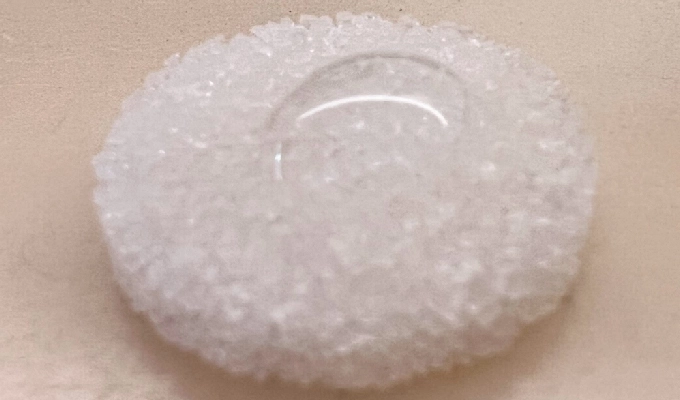
Porous PE and PP discs feature naturally hydrophobic surfaces that repel liquid electrolyte, allowing acid mist to condense and drain back into the cell. This significantly reduces acid loss during gassing and minimises corrosion of terminals, connectors, and nearby equipment. Ceramic discs, by contrast, are inherently hydrophilic:
- Electrolyte mist is readily absorbed into the pore network
- Saturated pores reduce venting efficiency and increase the risk of acid leaks
- Over time, ceramic discs act as reservoirs for acid rather than barriers against it
3. Porosity Control and Venting Consistency
Porous plastic flame arrestors offer highly uniform pore size distributions, repeatable airflow characteristics from batch to batch, and stable pressure drop over time. Thickness, porosity, and permeability can all be customised to suit specific venting requirements. Ceramic discs are harder to control with the same precision:
- Pore size can vary due to firing conditions
- Microcracks form during manufacturing or handling
- Absorbed electrolyte changes the effective porosity over time
- The result is less predictable gas flow and ageing behaviour, which is unacceptable in modern battery designs
4. Mechanical Strength and Resistance to Vibration
PE and PP porous discs are tough, impact-resistant materials that absorb vibration without cracking and resist chipping and edge damage during assembly and long-term operation. Ceramic discs are inherently brittle and present consistent mechanical risks:
- Prone to cracking during installation or transport
- Vulnerable to microfractures under vibration
- Damage may not always be visible, but it can directly compromise flame arrest performance
Mechanical reliability alone is a compelling reason why porous plastic discs have replaced ceramics in most modern lead-acid battery vent plugs.
5. Flame Arrest Performance
The effectiveness of a flame arrestor depends on pore size, heat dissipation, and gas velocity, not the combustibility of the material. Properly engineered porous PE and PP discs effectively quench hydrogen flame fronts within the pore structure before they reach the battery. The polymer itself does not ignite because temperatures drop below ignition thresholds within the disc. Ceramic discs that are cracked, saturated with electrolyte, or partially clogged can lose effective flame-quenching capability entirely, despite being non-flammable.
6. Lifecycle Cost
Porous plastic battery vent plug filter discs offer clear economic advantages over their ceramic counterparts:
- Lower manufacturing and handling costs
- Reduced breakage and warranty losses
- Less electrolyte loss and lower maintenance requirements
- Lighter components that also reduce shipping impact
Ceramic discs, while durable in theory, incur higher indirect costs due to breakage during handling, inconsistent performance over time, and a shorter effective service life, making porous plastic the more economical choice across the full battery lifecycle.
How Sansuk Industries Supports Battery Manufacturers?
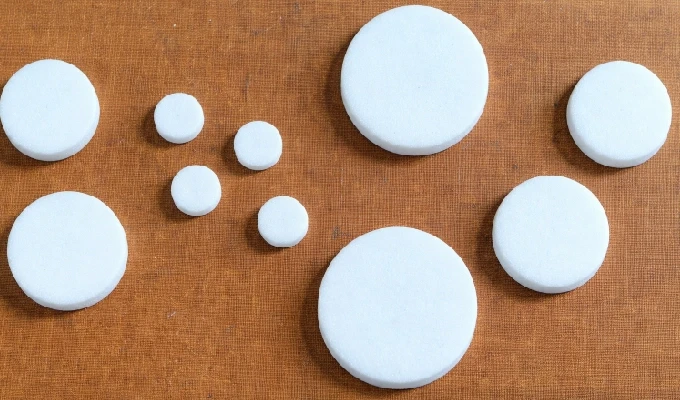
As a well-established porous plastic vent plug filters manufacturer in Mumbai, and a leading porous plastic products supplier in Mumbai, Sansuk Industries is a leading organisation with expertise in the design and development of high-performance PE/PP vent plug discs for lead acid batteries, and we are in close association with battery manufacturers for designing customized solutions for our customers’ requirements in terms of disc size, grades, and porosity specifications.
To learn more, visit our blog for technical insights and product updates.
Get custom porous plastic vent plug discs tailored to your battery specifications.
Conclusion
The evolving demands of modern battery systems have exposed the core limitations of ceramic discs in mechanical durability, electrolyte mist management, and long-term venting consistency. The porous PE and PP discs excel over the ceramic discs in all key performance attributes, including chemical resistance, hydrophobicity, flame arrest performance, and design flexibility. As battery technology evolves continuously, porous PE and PP flame arrestor discs are seen as an even better alternative to existing lead-acid battery vent plug technology.

FAQ's
Do these discs help reduce the need for watering the battery?
Yes. The hydrophobic nature of porous PE and PP discs retains electrolyte mist within the cell during charging, reducing acid loss and lowering the frequency of water top-ups in lead-acid batteries.

sansuk
Can porous plastic discs be customised?
Yes. Porous PE and PP discs can be customised in diameter, thickness, pore size and permeability to suit specific battery vent plug designs, offering far greater flexibility than ceramic discs.
sansuk
Are plastic discs chemically inert?
Yes. Porous plastic flame arrestors made from PE and PP are fully chemically inert to sulfuric acid. They do not dissolve, swell, or leach contaminants, ensuring stable long-term performance in battery environments.
sansuk
Which material holds up better to high temperatures?
PP discs offer slightly higher temperature resistance than PE, making them preferable in high-heat applications. Unlike ceramic discs, neither PE nor PP discs crack under thermal cycling, ensuring consistent venting performance.
sansuk
Are porous plastic discs more cost-effective than ceramic discs?
Yes, under ceramic vs plastic battery vent plug filter comparison, porous plastic battery vent plug filter discs have lower manufacturing costs, fewer breakage losses, and a longer service life, making them significantly more economical than ceramic discs over the full battery lifecycle.
sansuk
Which is easier to maintain over 5 or more years?
Porous PE and PP vent plug discs require virtually no maintenance. Their stable porosity and hydrophobic surface prevent clogging and degradation, outperforming ceramic discs, which are prone to electrolyte absorption and gradual performance decline.
sansuk