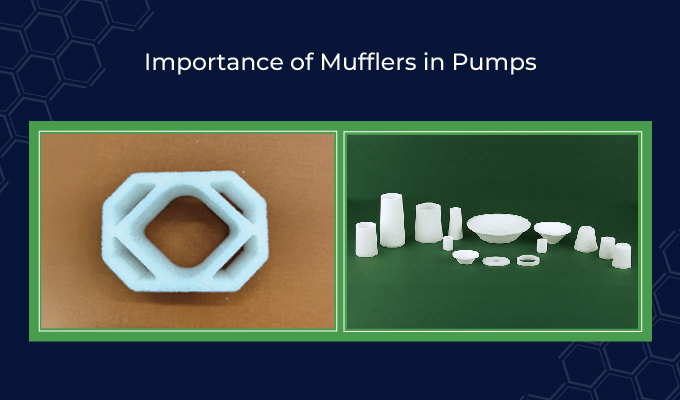
Pumps often generate excessive noise when switched to operation mode, primarily due to the release of sound and vibrational waves. This not only results in loud and disruptive noise but also negatively impacts the pump’s efficiency and lifespan. So, what’s the solution? The most effective way to address these issues is through the use of mufflers. In this blog, we will explore how porous plastic mufflers can be used in pumps, particularly Air-Operated Double Diaphragm Pumps (AODD Pumps), to reduce noise, vibration and improve overall performance.
A] What are Pumps?
Pumps are a type of mechanical device found in a wide array of industrial and commercial applications. Pumps play an important role in ensuring smooth operations by performing a variety of tasks, including circulating water in large-scale cooling systems, pumping out water and transferring liquids in chemical processing plants.
Looking for high-quality porous plastic mufflers?
How Do the Pumps Work?
The most common type of pump used is the Air-Operated Double Diaphragm (AODD) Pump. These are positive displacement pumps that transfer fluid by using two flexible diaphragms that alternately expand and contract. Compressed air (or another inert gas) is used to drive the diaphragms. Air is alternately delivered to one side of a diaphragm while venting the other side, causing one diaphragm to push fluid out, while the other pulls the fluid in, then the cycle reverses.
The Drawback
However, pumps generate noise and vibration due to the mechanical forces involved in transferring fluids from one location to another. These disturbances are caused by factors such as fluid turbulence, mechanical interactions within the pump components, and the motor driving the pump. These disturbances not only affect the efficiency of operations but can also have adverse short-term effects on the surrounding working environment and long-term impacts on workers’ health. Mufflers are used to address these issues by absorbing, dissipating, or redirecting sound waves and vibrations, making pump systems quieter and more efficient.
B] What are Mufflers?
A muffler is a product designed specifically to reduce the noise and vibration created by the movement of air, gas or liquid through the pump system. While there are various types of mufflers, their primary purpose remains the same: to reduce sound emissions without compromising the pump’s performance.
C] How Do the Mufflers Achieve Noise Reduction?
There are different ways mufflers achieve noise reduction:
- Sound Absorption: Mufflers absorb sound energy and convert it into heat, which reduces the intensity of the sound emitted by the pump, which is especially greater in AODD pumps and other diaphragm pumps
- Sound Diffusion: Mufflers can spread out sound waves, making the noise less concentrated and less noticeable
- Sound Reflection and Redirection: Certain mufflers are designed to reflect sound waves back into the pump, preventing them from escaping into the surrounding environment
Mufflers for AODD Pumps can vary in complexity, ranging from simple baffles to intricate multi-chamber systems. The materials used in mufflers play a crucial role in determining their efficiency in noise reduction.
D] How Porous Plastic Mufflers are the Best Solution for Noise and Vibration Control
Among the various types of mufflers available, porous plastic mufflers have been proven to be the superior option. Before exploring the how, let’s understand the basics of porous plastic mufflers:
1. What Are Porous Plastic Mufflers
Among the many materials used in mufflers, porous plastic has emerged as a highly effective solution for noise and vibration control, especially for diaphragm pumps. Porous plastic products contain a network of interconnected pores, which provides sound-absorbing properties. There are several types of porous plastics commonly used in industrial applications, including polyethylene, polyurethane and polypropylene. Each type offers different benefits but has one key characteristic: they provide an excellent balance of sound reduction, durability and versatility.
The sound reduction capabilities of porous plastic mufflers for pumps are based on their ability to absorb and dissipate sound energy. When sound waves encounter the porous material, the air pockets within the material create friction, which converts the sound energy into heat. This process significantly reduces the intensity of the sound before it escapes into the surrounding environment.
2. Factors Affecting the Performance of Porous Plastic Mufflers
The performance of a porous plastic muffler depends largely on the following factors:
- Porosity Level: The amount of void space within the material affects its ability to absorb sound. Higher porosity typically leads to better sound reduction, as more sound energy can be trapped and dissipated. Meanwhile, lower porosity typically leads to lesser sound reduction.
- Pore Size and Distribution: The size and distribution of the pores within the product affect how the sound waves interact with the material. Larger pores may allow more airflow but may not absorb high-frequency sounds as effectively, while smaller pores are better at absorbing higher-frequency sounds.
- Material Density: The density of the porous material also influences its ability to absorb sound. Denser materials tend to absorb more sound energy and are more effective at reducing low-frequency sound.
3. Advantages of Porous Plastic Mufflers
Cost Efficiency
The production of porous plastic mufflers is relatively inexpensive compared to other materials, such as metals or foams. The raw materials required for porous plastics are generally affordable, and the manufacturing processes involved are less complex and less labour-intensive. This makes porous plastic mufflers an attractive option for industries that need to balance performance with budget constraints.
Lightweight and Easy to Handle
Porous plastic mufflers are much lighter than metal alternatives, which makes them easier to install, replace and maintain. In large pump systems where space and weight are critical factors, the lightweight nature of porous plastic mufflers is a significant advantage. Additionally, their low weight reduces the overall load on the system, contributing to better efficiency.
Durability and Corrosion Resistance
Unlike metal mufflers, which can corrode over time when exposed to moisture or chemicals, porous plastic mufflers offer excellent resistance to corrosion and chemicals. This makes them ideal for use in environments where exposure to water, chemicals or other harsh substances is common. The durability of porous plastics leads to fewer replacements and reduced maintenance costs.
Versatility in Design
Due to the nature of pumps, mufflers are required in intricate designs and shapes. Porous plastic mufflers can be custom moulded into various shapes and sizes, offering exceptional flexibility in design. This versatility ensures that the muffler can fit seamlessly into the pump system while providing optimal sound reduction.
Environmentally Friendly
Many porous plastics are recyclable, making them a more environmentally friendly option compared to other materials like metals or synthetic foams. As industries increasingly focus on sustainability, porous plastic mufflers align with the growing demand for greener technologies.
4. Common Applications of Porous Plastic Mufflers
Water and Wastewater Treatment Plants
In water treatment facilities, pumps are used extensively to move water and wastewater through different stages of purification. These pumps can generate significant noise, which can be disruptive. Porous plastic mufflers are the best mufflers for water and wastewater pumps. It helps reduce this noise, ensuring that the facility operates quietly and efficiently while adhering to noise regulations.
HVAC Systems
In heating, ventilation, and air conditioning (HVAC) systems, pumps are used to circulate fluids that help regulate temperature and humidity. These systems are often installed in commercial buildings, residential units and industrial establishments where noise can be a concern. Porous plastic mufflers for HVAC pump systems are commonly used to minimise the noise produced by circulating pumps, providing a quieter environment for occupants.
Chemical Processing
Chemical processing plants often rely on pumps to transfer hazardous or volatile substances. Porous plastic pump mufflers for chemical processing help mitigate the noise and vibration generated by pumps, contributing to a safer and more efficient working environment.
Food and Beverage Industry
In the food and beverage industry, pumps are used to move liquids such as juices, oils or water. Noise reduction is essential in maintaining a pleasant working environment and ensuring that workers can communicate effectively in high-noise areas. Porous plastic mufflers provide an excellent solution for minimising disturbance in such environments.
Pharmaceutical
The fastest-growing application for pumps as of 2025 is in the pharmaceutical industry. Pumps for the pharmaceutical industry are used to transfer chemicals/liquids efficiently with minimal human interference.
Sansuk Industries is a leading sintered muffler manufacturer in India, offering porous plastic mufflers for a wide range of applications, including above. We are known for our cost-effective, high-quality, and durable industrial pump mufflers across the globe.
Looking for high-quality porous plastic mufflers?
Conclusion
Mufflers are essential for the operation of AODD pumps and other pumps. Cost efficiency, lightweight, resistance to chemicals and customizable design options have made porous plastic mufflers emerge as the clear favourite choice. With an increase in knowledge of the importance of mufflers in diaphragm pumps, the requirement for porous plastic mufflers is expected to grow rapidly. So, if you are looking for porous plastic mufflers, contact Sansuk Industries, a trusted sintered porous plastic filter manufacturer in India.

FAQ's
Are porous plastic mufflers environmentally friendly?
Yes, porous plastic mufflers are environmentally friendly, as they can be recycled and prevent contamination from going into the atmosphere. Also, it has a longer lifespan, which contributes to minimal material wastage, reducing environmental impact.

sansuk
Why are porous plastic mufflers better than metal mufflers?
The lightweight design, quieter operation, corrosion resistance properties, and efficient airflow due to the porous nature of porous plastic mufflers make them stand out over metal mufflers. The cost-effectiveness is another factor that makes porous plastic mufflers better than metal mufflers.
sansuk
Do Porous plastic mufflers require frequent maintenance?
No. However, if the muffler seems clogged, maintenance and cleaning are recommended to ensure optimal efficiency. Regular cleaning extends the lifespan of the muffler as well as the connected pump.
sansuk
What are the main advantages of porous plastic mufflers over metal ones?
The main advantages of porous plastic mufflers over metal ones are: corrosion and chemical resistance, light weight, ease of installation and maintenance, design flexibility, and filtration and system protection.
sansuk
In which industries are porous plastic mufflers commonly used?
Porous plastic mufflers are commonly used in a wide range of industrial and non-industrial applications, including wastewater treatment, HVAC systems, chemical processing, the F&B industry, and the pharmaceutical industry. Contact Sansuk Industries, a reliable sintered porous plastic air filter manufacturer in India, to discuss the suitability of porous plastic mufflers for your applications.
sansuk
How do mufflers reduce noise in pumps?
Porous plastic mufflers have interconnected pores, which absorb sound energy and convert it into heat. Consequently, it massively decreases the intensity of noise and vibration.
sansuk
How does porosity affect the performance of a porous plastic muffler?
The porosity significantly affects the performance of the porous plastic muffler by creating a critical balance between noise reduction and operational efficiency. The porosity also plays a role in energy conversion to reduce noise and vibration.
sansuk